
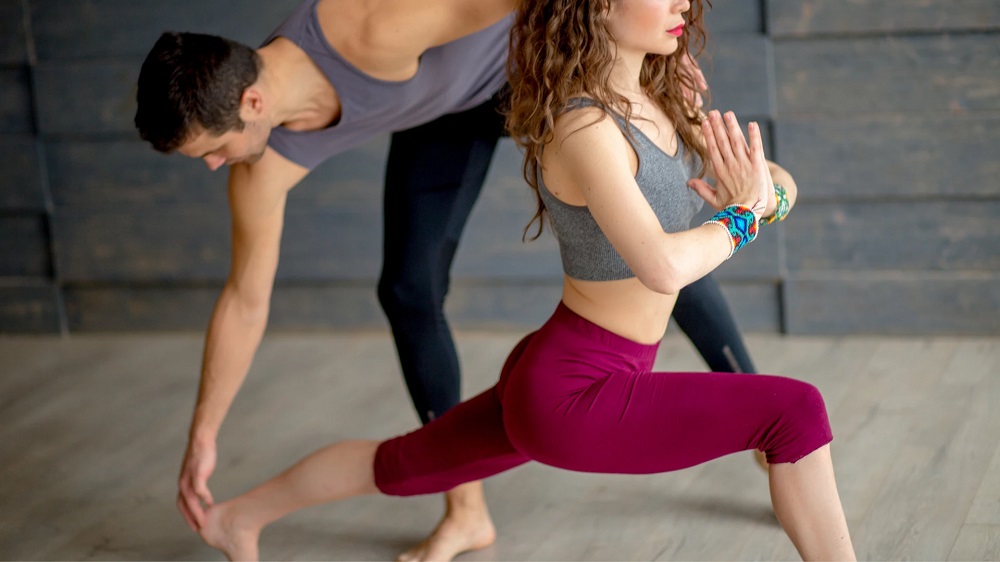
Left-to-right differences are common. One hip may rotate more easily, one foot may feel steadier or one shoulder may fatigue earlier. A private yoga instructor singapore can examine whether these differences affect the participant’s goals without assuming that every asymmetry needs to be eliminated.
The aim is usually to improve available options and load tolerance. Perfect visual symmetry is neither realistic nor necessary for every body or activity.
Asymmetry Is Not Automatically a Problem
Human bodies are not exact mirror images. Structural differences, previous activities, handedness and habitual tasks can all influence movement.
A difference becomes more relevant when it is associated with pain, repeated loss of control or difficulty performing a desired activity. Even then, yoga instruction should not be used to diagnose the cause.
The instructor’s role is to observe how the participant manages movement and select an appropriate exercise dose. Medical concerns remain within the scope of qualified healthcare professionals.
This distinction prevents normal variation from being presented as damage.
Start With Function, Not Appearance
An asymmetry that is obvious in a photograph may have little effect on function. Another difference may be visually subtle but influence balance or confidence.
Private assessment should begin with the participant’s practical goal. If the person wants to improve a single-leg stance, the instructor can compare control, support and breathing on each side.
Relevant questions include:
- Does one side require more hand support?
- Does fatigue appear earlier?
- Is the available range comfortable?
- Can the participant enter and exit slowly?
- Does the difference affect another activity?
- Is pain present?
These questions produce more useful information than deciding whether both sides look identical.
Load Can Be Changed in Several Ways
Load does not refer only to external weight. In yoga, demand changes according to leverage, support, range, tempo and duration.
An instructor may reduce load by shortening the stance, using a wall or keeping both feet grounded. They may increase it by removing support gradually, slowing the lowering phase or extending a hold.
For the less controlled side, a smaller range may allow better technique. The more capable side does not always need to be restricted to match it.
Each side can receive the version that supports useful practice.
Equal Repetitions Are Not Always Equal Training
Performing ten repetitions on both sides looks balanced, but the effort may differ substantially.
If one side loses control after six repetitions, completing four more may reinforce a poor strategy. The instructor might stop that side at six and adjust the exercise.
The other side could also stop at six for a period, or it might perform a different variation. The decision depends on the training objective.
Volume should reflect movement quality rather than a rule that both sides must always complete identical work.
Use Unilateral and Bilateral Tasks Together
Single-side exercises make differences easier to observe. Bilateral exercises show how both sides coordinate within one movement.
A private programme may use unilateral work to develop control, then return to a two-sided posture to see whether weight distribution changes.
For example, side-lying hip work may be followed by a standing pose. Controlled shoulder movement on one side may be followed by an overhead position using both arms.
This sequence connects isolated observations with whole-body movement.
Avoid Aggressive Correction
Trying to force the less mobile side to match the other can create discomfort without improving control. A restricted range may reflect anatomy, previous injury, sensitivity or temporary fatigue.
The instructor should select a range the participant can manage and review how it changes over time.
Strong manual pressure or repeated stretching is not automatically appropriate. A modest range with active control may be more useful than a visually symmetrical result.
Any sudden or unexplained change deserves suitable professional assessment.
Breathing Can Reveal Unequal Effort
A participant may perform the same visible pose on both sides while holding the breath on one. This suggests that the internal demand differs even when the shape appears similar.
The instructor can reduce the range or add support until breathing remains available. That modified position becomes the working version.
Progress may involve maintaining the same shape with less strain rather than increasing depth.
Breathing is therefore part of load management, not an unrelated relaxation instruction.
Track the Difference Without Becoming Fixated
A short record can show whether asymmetry is changing or remaining stable. Useful measures include support level, controlled repetitions, perceived effort and confidence.
Daily comparison is unnecessary. Movement varies according to sleep, recent training and stress.
Reviewing after several sessions provides a more reliable pattern. If the difference remains but no longer affects comfort or function, continued attempts to erase it may offer little value.
The goal should stay connected to the participant’s activity.
Know When Yoga Is Not Enough
Significant weakness, numbness, recurring joint instability or persistent pain requires assessment by an appropriate healthcare professional.
A private instructor can adapt a programme around professional guidance but should not claim to correct structural problems or treat an injury independently.
Clear referral boundaries protect the participant and make collaboration more effective.
Develop Capacity on Both Sides
At Yoga Edition, one-to-one instruction can help participants understand how each side responds to range, support and fatigue. The programme can then use different variations where necessary while preserving a shared movement goal.
Asymmetry does not need to disappear for progress to occur. One side may remain naturally different while becoming more controlled and confident.
The purpose of personalised loading is to make movement more usable, not more cosmetically uniform. When function guides the programme, differences can be addressed without turning the body into a symmetry project.


